Parkrose Green Futures
Youth building a cooler Parkrose for all
Greening Parkrose: Why Green Spaces Matter Here
East Portland is one of the hottest parts of the city. Neighborhoods like Parkrose have fewer trees, less shade, and more pavement than many areas west of the Willamette River. This creates what scientists call an urban heat island—places where buildings, roads, and parking lots absorb and trap heat, making temperatures significantly higher than nearby neighborhoods with more trees and vegetation.
In fact, research in Portland shows that neighborhoods with less tree canopy and more pavement can be dramatically hotter, especially during heat waves. These same neighborhoods often have fewer parks and natural areas, meaning residents have fewer places to cool off, gather, or connect with nature.
Parkrose sits in the center of this challenge. Historic Parkrose is working to change that.
Our Approach: Cooling the Neighborhood While Building Opportunity
Our Green Spaces work focuses on transforming underused or paved spaces into cooler, greener, community-centered places. These projects do more than add plants or trees. They:
Increase tree canopy and shade
Reduce pavement that traps heat
Create places for neighbors to gather
Improve stormwater management
Support healthier, more resilient neighborhoods
Green infrastructure—like trees, gardens, and planted spaces—can significantly reduce urban heat and improve community health during extreme heat events.
For Parkrose, investing in green spaces is an investment in climate resilience and community well-being.
Youth Workforce Development
Our green space projects are also a hands-on workforce development program for youth in East Portland.
Through paid training and project-based learning, young people help design, build, and maintain neighborhood green spaces. Participants gain real skills in:
Urban forestry and landscaping
Environmental stewardship
Construction and site preparation
Teamwork and project management
At the same time, they are directly improving their own community by creating cooler streets, greener gathering spaces, and healthier environments for their families and neighbors.
This program connects climate action with economic opportunity, preparing the next generation to care for the places where they live.
First up: The Historic Parkrose Immigration Statue Island Project
This project proposes the revitalization of the landscape surrounding the Immigrant Statue in Portland, Oregon on NE Sandy Ave. This important site stands on Indigenous land and holds historical significance both to immigrant communities and to the original people of this territory.
Vision & Objectives
The central vision of this project is to create a community-led, multi-functional space that honors both Indigenous heritage and immigrant contributions. Our objectives are:
Restoration of the Immigrant Statue landscapes
Educational integration — with signage and interactive displays honoring Indigenous people and cultures
Seed Gardens — Indigenous-inspired and culturally significant plant beds to capture and share seeds with the community
Cultural Connectivity — through small sitting areas, walking paths, and art installations
Community Access and Equity — water fountains, community libraries, and Nike bike access
Historic Parkrose, Bloomsday Natives and The Pathfinder Network are collaborating to overhaul the island right at the main entrance of Parkrose off Hwy 205.
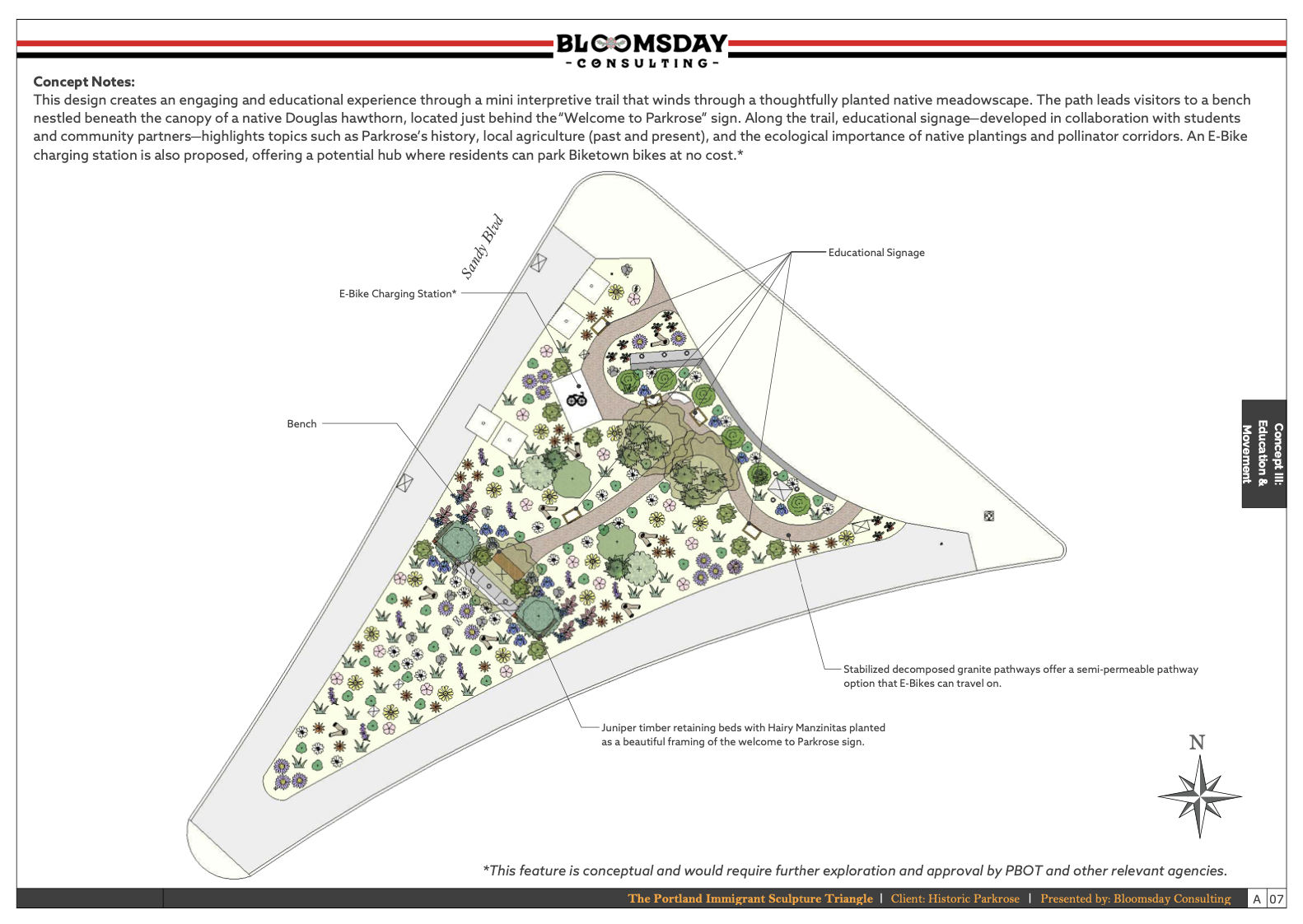
The Immigrant State island located where Sandy Blvd & Lombard Ave merge, at the onramp for 205, will be the first location to be revitalized with native plants.
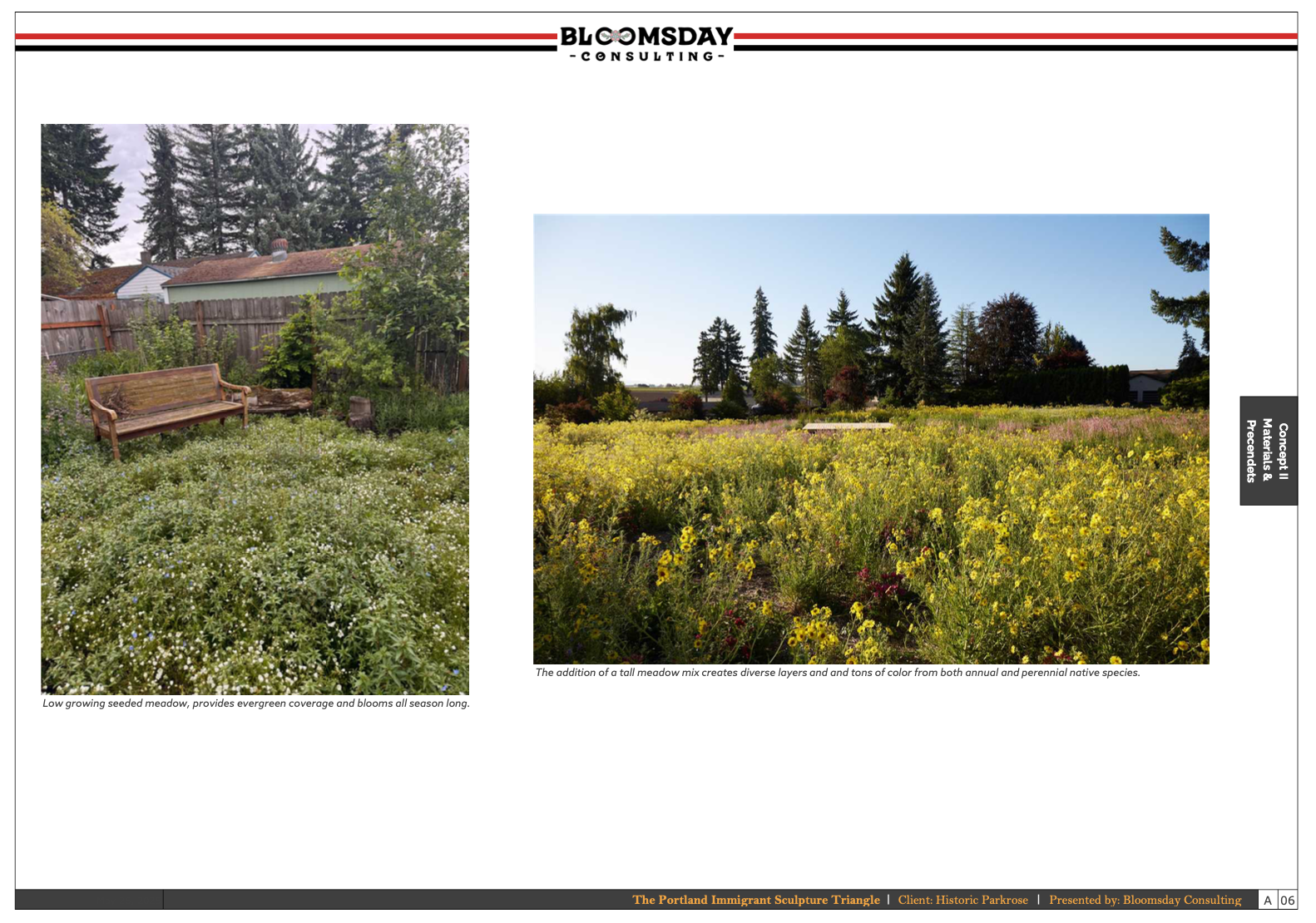
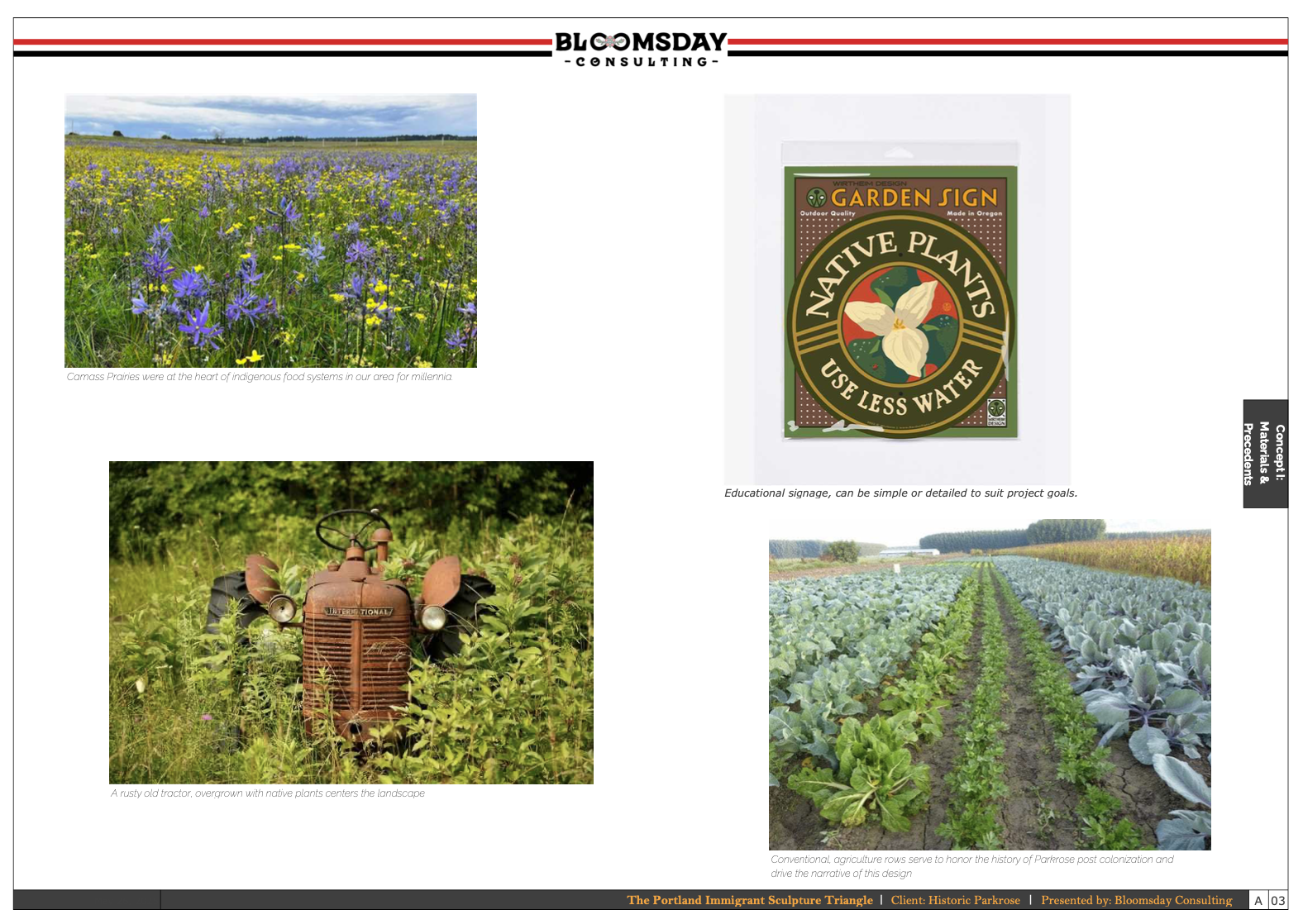
This project will transform a commercial area serving many low-income residents by installing native plants and sustainable landscaping to address environmental inequities. These improvements will reduce urban heat, improve air quality, and lessen noise impacts in a community disproportionately affected by climate challenges. The revitalized green spaces will enhance neighborhood livability and support biodiversity while providing accessible natural areas for residents. The project advances equity and climate justice through sustainable, community-focused solutions.